From facial recognition to drones, the use of AI and digital surveillance technology is expanding across the police service. But concerns about bias and disproportionate outcomes raise a question: how do we ensure that the drive for efficiency and effectiveness does not entrench racial inequalities?
🕒 Estimated read time: 4 minutes
The rapid expansion of AI in policing
Earlier this year, Keir Starmer’s government published the Police Reform White Paper and announced a shift towards AI and automation, including the creation of PoliceAI.
The white paper committed £115 million over three years to support the adoption of AI and automation in policing. It also set out plans for 40 additional live facial recognition (LFR) vans. The aim is to free up officers to spend more time in their communities and to coordinate police responses at a national level.
Following a consultation on how law enforcement agencies use biometrics, facial recognition and similar technologies, the Home Office has proposed a new legal framework that would require independent testing for bias and discrimination.
Racial disparities in AI Deployment
JUSTICE, the cross-party charity championing UK justice reform, has reported that data fed into AI systems can mirror societal bias and entrench discrimination. The Independent Scrutiny and Oversight Board (ISOB), which oversaw the implementation of the Police Race Action Plan, raised similar concerns. It warned that data systems built on historical policing patterns risk formalising existing disproportionality rather than correcting it.
The Guardian reported that, at certain settings, a retrospective facial recognition system used to search police custody images was more likely to produce false matches for Black people. At one setting, testing found a false positive identification rate of 9.9% for Black women.
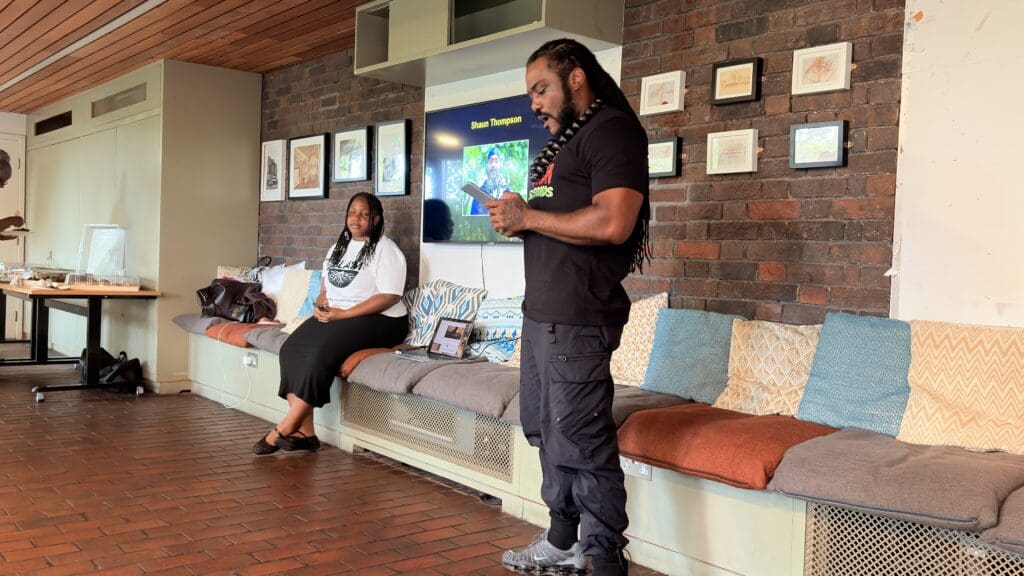
In a separate case involving live facial recognition, Shaun Thompson, pictured below, was wrongly identified by LFR and detained by police at London Bridge station. He described the encounter as “intimidating” and “aggressive”. It was only after he showed officers a photograph of his passport that they accepted he was not the person they were looking for.
Where police deploy LFR also raises concerns about racial disparities. Research by the Green group at City Hall found that 92 of London’s 180 facial recognition deployments in 2024 took place in areas where the proportion of Black residents was higher than the London average. This raises concerns that the use of LFR could reinforce patterns of over-policing in Black communities.
Despite the investment, the technology’s effectiveness remains open to question. In early May 2026, The Guardian reported that the Met had scanned more than 1.7 million faces in London since the start of the year, an 87% increase on the same period in 2025. Those scans led to 44 arrests. This high ratio of scans to arrests also raises questions about efficiency.
Stalled progress towards racial equality in policing
Black Learning Achievement and Mental Health (BLAM), an award-winning not-for-profit organisation, is researching the intersection of AI, digital rights, racial justice and policing.

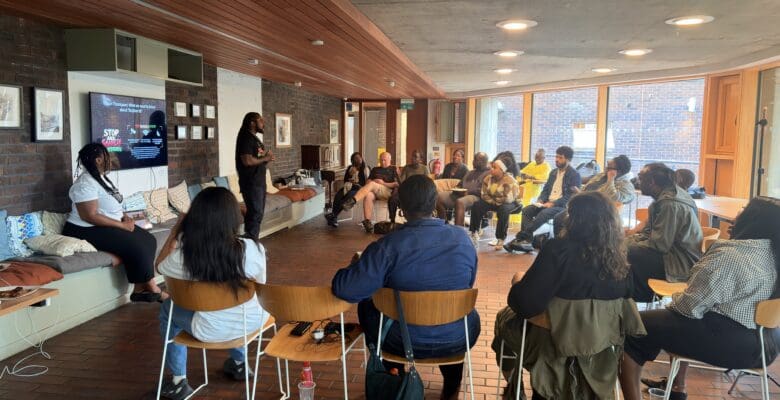
At a community event at the end of the summer of 2026, BLAM distinguished between place-based and person-based policing. In place-based policing, systems use historical crime data to identify ‘hot spots’ where police deploy extra patrols. BLAM argues that this risks creating a feedback loop. As more officers patrol a location and record minor offences, the system interprets those records as evidence that the area is even more dangerous.
In person-based policing, individuals are assigned risk scores that can be shared with external agencies. One example was the now-defunct Gangs Violence Matrix, which racially profiled many young Black people in London.
Following concerns about its disproportionate impact on Black boys, the Met decommissioned the Gangs Matrix in February 2024 and replaced it with the Violence Harm Assessment (VHA). However, evidence shows that young men from ethnic minority backgrounds are disproportionately represented in the VHA, suggesting that the Matrix has been abolished in name only.
In our response to the Home Office’s consultation on biometrics and facial recognition, we argued against law enforcement agencies using this technology because of these concerns. We raised particular concerns about retrospective facial recognition, which relies on custody images collected in a context where racialised communities are disproportionately policed. We recommended that an independent authority approve each deployment of LFR, that police use a higher threshold for a match to reduce false positives, and that the government learn from models such as the EU AI Act.
For more information about our work or to get in touch, please contact hello@actionforraceequality.org.uk.
To be the first to hear about topics like these, we recommend signing up to our monthly newsletter.
Author: Bowale Fadare, ARE Policy & Research Officer