This blog is part of Action for Race Equality’s Racial Terminology Project series, exploring how racial terminology is used, understood and debated across the UK today.
Estimated read time: 4 minutes
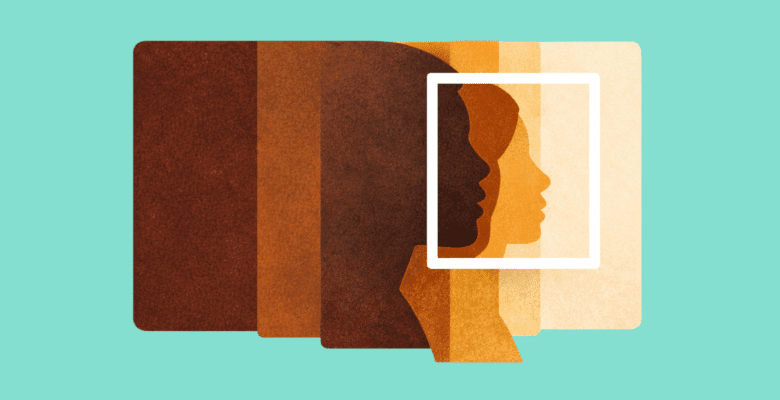
Colorism is a term often used to describe the ways in which people within racialised communities with lighter and darker skin tones are treated and experience racism differently. This is often interpreted as a consequence of the perceived benefits of proximity to Whiteness.
The linguistic and imaginative failure of racial terminology to capture skin-color difference effects the way racism operates for different people. In the case of increasing awareness and combatting disparities in healthcare treatment and outcomes, there is a clear and present need to develop language to speak lucidly about skin tone difference. Participants who worked in healthcare spotlighted the failures of pulse oximeters to accurately read darker skin, highlighted during the covid pandemic.
During the pandemic, pulse oximeters weren’t accurately reading on dark skin, so people received less oxygen. Or increasing awareness of maternal and neonatal health disparities, and how there are real disparities in detecting jaundice on Black and Brown babies. And a challenge that we found is how do you talk about that skin tone difference? ‘Darker skin’, that obviously has problems. You’re kind of inadvertently centering Whiteness, but non-White skin is it feels like a complete no go.“
– Focus Group participant
Racial terminology often fails to account for the identities people who might be at the ‘margins’ of better-documented experiences of race and racism. Participants in our research had insightful contributions around the term ‘White-passing’, sometimes used to refer to people who may have Mixed Heritage that includes White British heritage, and can in some circumstances ‘pass’ as White, with the implication that they may experience treatment different to that if their ‘true’ racialised heritage was known.
One participant prefers to use the term ‘White-assumed’, as it puts the onus on the person who is assuming that Whiteness is the ideal that should be aspired to. A novel lens for many participants was the idea that someone might be ‘White-assumed’ in some contexts, but might have experiences of racism related to the non-White racialisation of their family or their parents.
They might experience racially disparate health outcomes or housing outcomes that are influenced by the racialisation of their family, or their heritage, upbringing, or community, but that do not necessarily track with their experience as an individual racialised as White in some contexts.
We often use the term ‘communities experiencing racialised inequalities’, or we will say ‘racialised communities’, because we know the importance of making sure people who are White passing, [are included] – they will still be racialised in a certain way. However, then we still need terms like people of color to recognise like the different experiences which people of color will have in comparison to people who are White passing but still racialised in different way.“
– Focus Group Participant
The organisations who were involved in representing Traveller communities pushed back against the use of ‘non-White’ as a term which blocks the communities that they work with from anti-racism spaces and precludes their experiences of racialisation from being heard. In other groups, some participants felt that terms which do not foreground ‘colour’, such as ‘minoritised’, could ‘allow’ White minority groups into spaces and conversations that centre different experiences to those for whom ‘passing’ in any space is an impossibility.
The moment you go down the ‘minoritised’ route, and you start to bring in White groups and White individuals and White minority groups, what my experience is, even though all of us know we brothers and sisters at the end of the end of the day. We’re all human beings, and the experience of one minority is very similar to another minority at the end of the day. The fact that our race, our Brownness, we can’t hide it, that people just see us and know it, this is not something we can get away with. I’ve had arguments with White groups, White European groups, where they’ll say, look, we experience the same with you. And I’ll say, yes, you do right now, but in one generation time, your kids won’t. My kids will.”
– Focus Group Participant
There are a range of experiences that those with a Mixed Heritage or ‘White’ minorities might feel they lack adequate language to address. Navigating experiences of whiteness, ‘white-passing’, and ‘white-assumed’ on the sliding scale of colourism requires explicit and tailored conversations about experiences of racism. In the same way we have acknowledged the issues in using acronyms like ‘BAME’ in discussions about race, we must continue to advocate for nuanced language which encapsulates both shared and differing experiences of racism.
This blog is part of a series on our Racial Terminology Project. To find out more and access our guide, visit here.