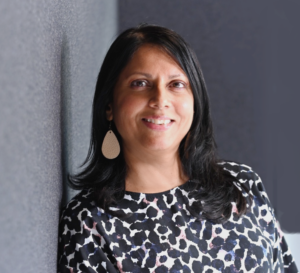
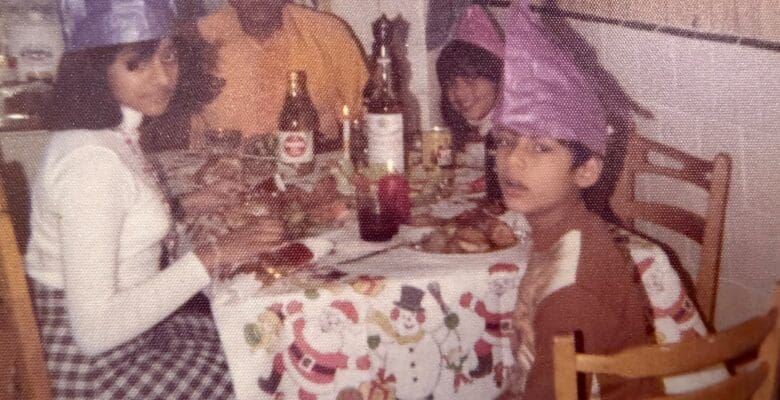
Indra Nauth, ARE’s Deputy Chief Executive, shares her memories of growing up as a minority within a minority for South Asian Heritage Month.
“Why does your Mum speak Jamaican?” is something I remember a work colleague asking me a few years ago. They asked as my family and I look visibly South Asian (due to our heritage) however my parents are from Guyana, a country in South America that is classed as part of the Caribbean, hence Mum’s accent
I realised then that many people don’t know that there is a community of people living in the UK who outwardly appear to be South Asian however are from the Caribbean or of Caribbean descent.
As Indo-Caribbeans we have our own culture, food, music and language. A unique blend that mixes our Bhojpuri/Indian ancestry, with influences from the enslaved Africans in the Caribbean, indigenous people and the influence of British, Dutch and Portuguese colonialism.
This South Asian Heritage Month, I’m writing this blog as I don’t often see stories about the Indo-Caribbean diaspora. With this year’s focus on Unity in Diversity, I wanted to acknowledge our historical connections while setting out what it means to me; to be part of this community.
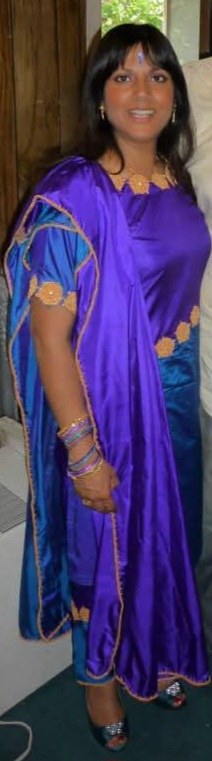
My parents came to the UK in 1962, part of what has now been termed the “Windrush Generation” when thousands of people coming from British Colonies to “rebuild the mother country” after the Second World War. But how did my family end up in Guyana? Following the abolition of slavery, Britain created the indentured labour system, to solve huge labour shortages on plantations across the Caribbean; and they looked to colonies like India to provide cheap labour.
Action for Race Equality recently produced a report on Racial Terminology and it got me thinking about how I identify. On the UK Census form, I usually tick “other” and write in Indo-Caribbean even though I was born here, as I don’t feel saying I’m British is the sum of my parts.
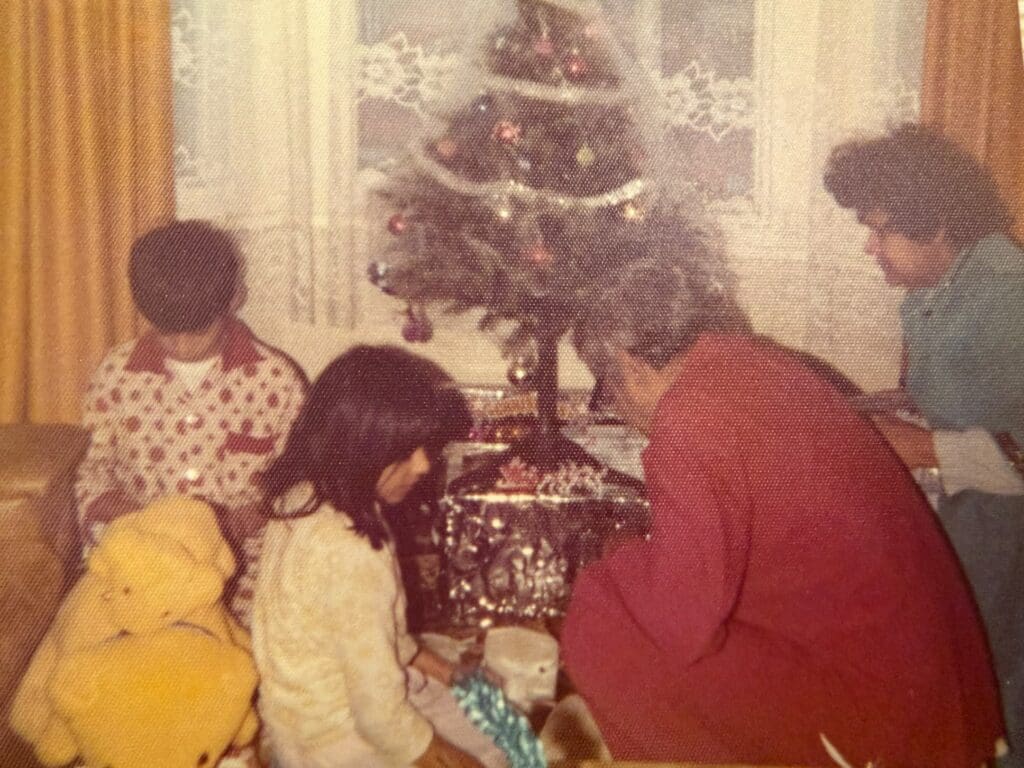
My life has always been a blend of where I was born, my ancestral culture and my religion. Growing up, this meant going to school and singing Christian hymns, saying the Lord’s Prayer every morning at assembly; attending Sunday School as part of being a Girl Guide, then heading off to the temple later to attend Hindi school and Sunday prayers.
At home, we ate Guyanese food – chicken curry, dhal, roti, saltfish and bake and vegetables like okra (we pronounced it okrow) and karela (korila). But my Mum would also make spaghetti bolognese (her version), a roast on a Sunday and other meals influenced by her life in England.
By this time, dad worked for London Transport as a bus conductor and my mum worked in D H Evans department store on Oxford Street as a tea lady.
My parents loved to listen to Lata Mangeshkar and other songs from the Bollywood movies they enjoyed in Guyana, while my siblings and I would listen to Motown and watch Starsky and Hutch. At family parties, calypso, soca and chutney music (a blend of soca and Bollywood genres) was the common ground that all generations met on.
I could switch between speaking Guyanese creole, which is richly interspersed with Bhojpuri/Hindi words, influences from West African dialects and English. My Mum might say “fetch the belna so we can belay the roti” which translates as bring the rolling pin so we can roll out the roti, and I honestly just thought I was speaking and understanding “Guyanese” and didn’t really know or even think about how this rich language had evolved over time.
Because there is no way to account for us in the UK census, the true numbers of Indo Caribbeans are unknown.
Those coming largely from Guyana and Trinidad make up the bulk of the Indo-Caribbean population today; this might be around 50,000-100,000, which at the top end is only 0.14% of the UK population or 1 in every 695 people.
For many, unless they know someone who is Indo-Caribbean, when they see someone that looks like me, their initial thought is that I’m from South Asia and not via the Caribbean. Because our numbers in the population are relatively low, this blog is to encourage people to be curious and to maybe ask the next person you see, “What’s your heritage, if you don’t mind me asking?” and you may be surprised to hear them say, “I’m Indo-Caribbean”.