As part of ARE’s collaborative work with Black, Asian and Mixed heritage-led organisations to strengthen the community and voluntary sector and improve outcomes, we’re proud to actively spotlight organisations, individuals, initiatives and campaigns that share our mission to advance race equity in the UK.
Estimated read time: 5 minutes
Jonah’s Project Interception Hub is a community interest company that provides services to young people aged 11-30 years, who are convicted, involved or at risk of criminal activity.
Interviewee: Natalie Wilks, the Managing Director, Jonah’s Project Interception Hub
If you had to summarise what you do in a sentence, what would you want to get
across?
We provide holistic services to young people aged 11-25 years who are convicted, involved, or at risk of criminal activity. This involves wellbeing support, advocacy, mentoring, and positive activities.
Why or how did you get involved in the criminal justice system (CJS)?
We are an all-black team with lived experience of the criminal justice system (CJS).
With our 20 years of experience working with young people and our understanding of injustices within the CJS, we felt it was natural for us to create a safe space for young people to avoid the challenges and experiences we faced.
We want to make sure young people are given fair and unbiased treatment, aiming to plug gaps in the system that allow them to fall through.
What is your vision for the future?
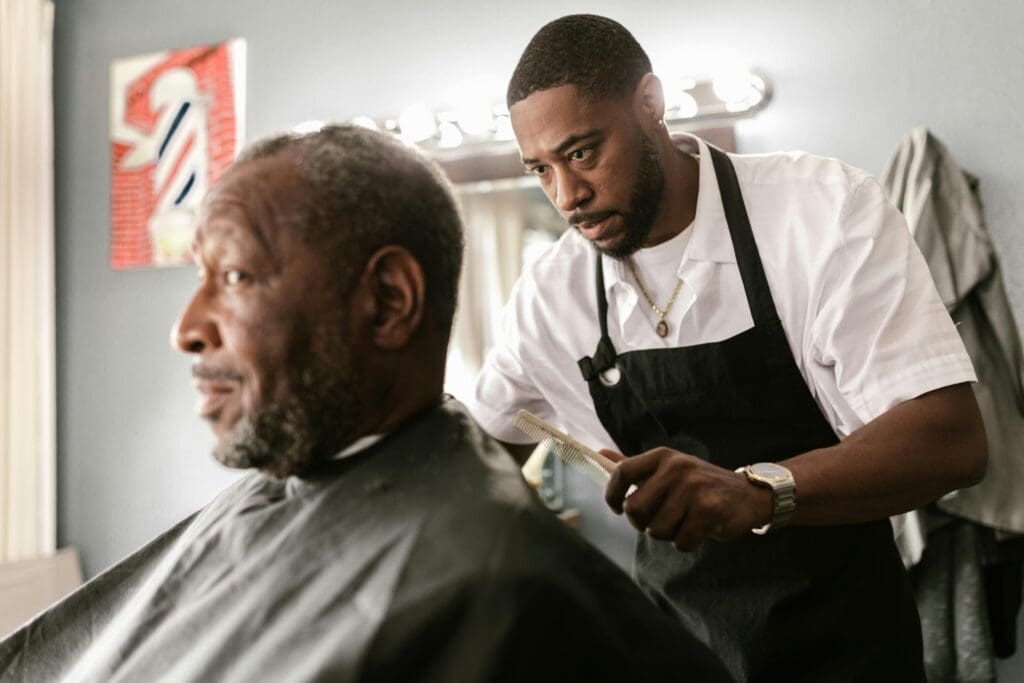
The future for us is determined by young people and what they want or need from us. This helps us decide how we move forward. For example, we are currently developing a barbershop in our space as a way for young people to learn new skills and make legitimate money.
Our aim is to continue to build our space so that young people feel safe and secure. Factors such as structural racism, adultification and disparities within these systems take away their innocence. We want to encourage them to enjoy their childhood and embrace it.
Why do you think it is important for ‘led by and for’ organisations to work in the CJS?
Led by and for organisations are essential within the criminal justice system (CJS) because of the deep-rooted distrust many Black communities have towards statutory systems. Understanding why this distrust exists, and how it plays out in young people’s lives, allows for more meaningful and authentic relationships to develop.
Many systems within the CJS are not designed to support Black young people and, in practice, often work against them. Over-policing of Black young males, adultification in police interactions, limited support within youth justice and probation services, and poor relationships with statutory bodies all contribute to this ongoing distrust.
These organisations are therefore needed to address the gaps created by these systems. This distrust did not start with this generation; it has been shaped by the experiences of parents and grandparents over time. Without organisations led by people who share lived experience of these harms, young people are at risk of being overlooked and unsupported.
How could the CJS be improved, and how does your work feed into that solution/landscape?
The CJS needs reforming in many ways; the core of the system has never changed, meaning it is outdated and not fit for purpose.
There needs to be a consistent effort that combines academics, researchers, the community and statutory bodies to come together and gather the right information and data needed to force long-lasting change. We have made links with police and PCCs and have developed pilot programmes to help feed into this landscape and support change. However, the issue is that there is no longevity.
What are some milestones or successes you are proud of?
We are proud of how we adapt and create services that are based on the needs of our young people and what they want from us. The two successes we would highlight include our Peer Hearing Pilot that offered a second chance to young people on the cusp of criminal activity to engage without receiving a conviction. This developed into a standby service that supports young people referred from services based within the custody suite.
Another achievement is the Men4Justice service for 16–30-year-olds to advocate for complaints against adverse stop and search or custody suite treatment. This service gives a voice to young people who would not normally complain about their treatment due to a lack of trust that the system would hear their injustice.
How has working in the CJS impacted your understanding of Black, Asian and Mixed Heritage young people and the criminal justice system?
Adultification and its impact is a massive issue that needs exploring within the UK, as it plays a role in young black males ending up within the CJS. The disparities with black young males are longstanding and intersectional; they suffer injustices across all systems. This is reinforced through the media, when a young black male commits a crime, his race is highlighted as a part of the crime, whereas the same is not true for other ethnicities. However, there is unfairness towards Asian males as their inequalities within the CJS are not as prevalent. As an all-black organisation, we challenge the impacts we perceive on behalf of our young people, aiming to balance the scales of injustice.
Do you agree with the Macpherson definition of institutional racism? What would you add or remove?
Macpherson’s definition seems outdated and refers only to service. This needs to be
reviewed as time has progressed, and in some instances, the profession has led to more covert and structured racism, causing this definition to become dormant. This is evident because we have had the same conversation 26 years on.
What do you think about British policing being described as a ‘two tier’ system?
The fact that this is being labelled and raised as an issue reinforces systematic racism; public perception finds this to be an issue but does not raise the same concern for the inequalities black males face. There is a need for fair treatment across the board.
DISCLAIMER:The views expressed in this interview reflect the lived experiences and work of Natalie Wilks, Managing Director, through Jonah’s Project Interception Hub in the voluntary sector and do not necessarily reflect those of ARE. We are committed to amplifying diverse perspectives on race and justice to foster meaningful discussions and reflect on these lived experiences.