• Skip to primary navigation
  • Skip to main content
  • Skip to primary sidebar
Action for Race Equality

Action for Race Equality

Empowering Young People who are Black, Asian and of Mixed Heritage

  • Donate
  • ARE at Work
    • Programmes & Projects
      • Building Ethnic Diversity in the Youth Employability Sector
      • Evidence into Action
      • The Graduate Connector Programme
      • Routes2Success
      • Stronger Futures
      • UPLIFT Programme
      • Windrush Justice Programme
    • Education
    • Employment
      • Ethnicity Pay Gap
      • A Journey to Inclusion
    • Criminal justice
      • Alliance for Police Accountability
      • The Gangs Matrix
    • Policy and Research
      • Donate
  • Who we ARE
    • Team
    • Trustees
    • Funders
    • Youth Action Network
    • History
  • ARE Community
    • Voluntary & Community organisations
    • Young People
    • Schools, colleges and training organisations
    • Collective Impact Partnerships
    • ARE as policy makers and researchers
    • Diversity & Inclusion Experts
    • Media
    • Businesses
  • Training & Consultancy
  • ARE Voices
  • Take action
    • Work with us
    • Youth Voice
  • Show Search
Hide Search
Home/ARE voices/ARE news/Ten Years On: What has changed since The Young Review?

Ten Years On: What has changed since The Young Review?


  • Bluesky
  • LinkedIn
  • Facebook
  • Instagram
  • X

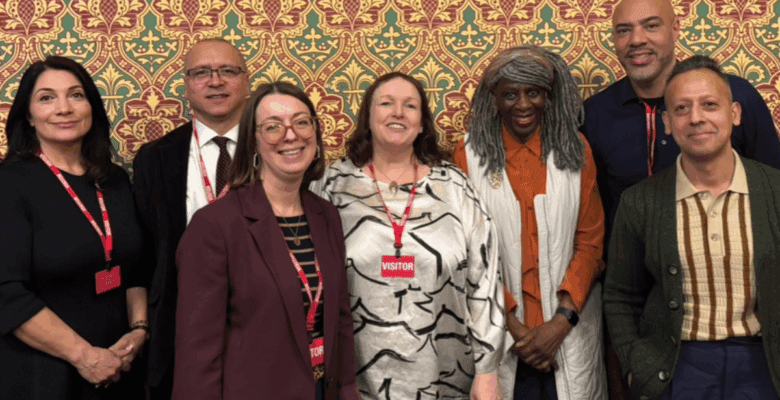
In January 2026, Action for Race Equality, in partnership with Clinks, convened policymakers, practitioners, and community organisations at the Houses of Lords to reflect on progress ten years after The Young Review and to ask why outcomes for Black, Asian, Mixed Heritage, and Muslim people in prison remain so poor.   

🕒 Estimated read time: 3 minutes

Hosted by Baroness Lola Young, the event followed the publication of our Young Review: 10 Years On briefing in late 2025, which examined what action has been taken over the last decade to address the racial disparities identified in the seminal review. 

While there was agreement that some progress has been made, the dominant feeling in the room was that change has been slow, fragile, and too often dependent on short-term political will rather than sustained structural reform. 

A system under strain  

In a system where priorities shift with every political cycle, long-term reform has felt stilted, and a lack of continuity in policy, leadership, funding, and institutional memory was recognised as a significant barrier to making progress. 

Against a backdrop of the capacity crisis, high staff turnover and shortages, and crisis-driven management mean that even well-intentioned staff struggle to deliver rehabilitative support. Several speakers at the event noted that with prisons and probation operating at or near full capacity, the focus inevitably narrows to basic requirements: feeding people, maintaining order, and preventing immediate harm. This left attendees wondering where in the list of priorities tackling racial disparities lays.  

By and for organisations  

Strong consensus emerged around the importance of organisations led by and for Black, Asian, Mixed Heritage and Muslim people and those with lived experience in supporting necessary change. Our panellists from Zahid Mubarak Trust, Maslaha, Spark2Life, and the Alliance for Youth Justice noted that these organisations are often under-resourced, operating with short-term funding, limited infrastructure, and heavy compliance burdens.  

Several contributors warned that large, well-resourced institutions frequently receive funding to deliver services to communities they are not part of, while grassroots groups struggle to survive. 

If community organisations are expected to play a central role in reform, participants argued, they must be funded not just to deliver projects, but to build resilient and sustainable organisations. 

Data and AI  

Despite repeated commitments to evidence-led policy, several speakers described a decline in publicly available equality data. Where detailed breakdowns were once published across many protected characteristics, now only a small number of headline indicators are routinely accessible. 

This has pushed researchers and charities toward Freedom of Information requests to obtain data, which means that without consistent, disaggregated data, it becomes difficult to track progress, identify harmful practices, or evaluate whether reforms are working. 

Concerns were also raised about the increasing use of data-driven tools and AI in justice decision-making. Participants warned that systems trained on biased data risk automating and entrenching existing racial inequalities at scale and more invisibly than existing decision-making processes – particularly in instances where religious and racial identities are conflated with risk in ways that reinforce discrimination.   

Short and long-term reforms  

Some instances of change were noted as important successes in the last 10 years – including the significant reductions in the number of children being held in custodial settings, the implementation of a race action programme in HMPPS, and the Wales anti-racist criminal justice plan.

However, even successes remain impeded. In the youth justice system, racial disproportionality is now more pronounced than ever, and the long-term legacy of the race action programme is unclear.  

While much of the discussion focused on improving existing systems, others questioned whether incremental reform can ever fully address harms rooted in the structure of punishment itself. 

Some argued that communities have long built alternative forms of support to survive the damage caused by criminalisation, and that alongside reforming prisons, society must invest in community-based responses that prevent people entering the system at all. 

Several panellists described a pattern of “activity replacing impact”: initiatives, pilots and consultations continue, but without clear targets, accountability mechanisms, or evidence that disparities are actually narrowing.  

Speakers called for clearer national leadership, cross-departmental coordination, and transparent targets for reducing disproportionality – not just monitoring it.   

Call to action  

The event closed with a sobering recognition: that it is deeply troubling to still be having the same conversations a decade on, but it also ended with determination that collective action, honest accountability, and sustained political will can still shift outcomes. 

Calls were made for:  

  • Published, co-produced action plans with measurable outcomes 
  • Clear leadership responsibility for race equality  
  • Independent scrutiny with consequences  
  • Legal frameworks with real enforcement power 
  • Funding aligned with stated commitments 
  • Stronger engagement with lived-experience leadership 
  • Long-term investment in community infrastructure 

Without confronting race directly, in data, policy, funding, leadership and culture, this risks meaningful reform remaining out of reach. 


Author

Meka Beresford

Head of Policy

    You might also be interested in…

    Make More Launches “Healing Through Justice”: A Well-Being Project for Windrush Survivors

    Continue Reading Make More Launches “Healing Through Justice”: A Well-Being Project for Windrush Survivors

    Police Disclosure of Suspect Ethnicity and Nationality 

    Continue Reading Police Disclosure of Suspect Ethnicity and Nationality 

    Building Fair Futures: The Race Equity in Employment Task Force

    Continue Reading Building Fair Futures: The Race Equity in Employment Task Force

    Published on:
    27/01/2026

    Categories: ARE news, ARE opinion, ARE voices, criminal justice, policyTags: ARE news, ARE voices, criminal justice, news, policy event, The Young Review

    Primary Sidebar

    Areas of work

    • News
    • Education
    • Employment
    • Criminal justice
    • Training & Consultancy
    • Policy & Research
    • ARE voices

    Latest

    • Ten Years On: What has changed since The Young Review?
    • Project Development and Engagement Officer
    • Met Police’s review of its vetting and hiring practices highlights serious failings; so, let’s not use EDI as a scapegoat.

    Popular

    • The Hamilton Commission
    • Response to Public Accounts Committee on apprenticeships
    • Institutional racism, a leadership challenge
    • Is prison really a holiday camp?
    • National Probation Service London roundtables

    Explore more

    Looking for information on a completed Action for Race Equality project? If you can’t find it on our website, let us know.

    Services for business and not-for-profits.

    Training and Consultancy

    Footer

    Registered Charity No 1056043
    Company registration No 03203812

    Action for Race Equality © 2026

    • Privacy Policy
    • Safeguarding Policy
    • Contact
    • Training & Consultancy
    • News
    • Opportunity
    • Publications
    We use cookies on our website to give you the most relevant experience by remembering your preferences and repeat visits. By clicking “Accept All”, you consent to the use of ALL the cookies. However, you may visit "Cookie Settings" to provide a controlled consent.
    Cookie SettingsAccept All
    Manage consent

    Privacy Overview

    We use cookies to improve your experience while you navigate through the website. Out of these, the cookies that are categorised as necessary are stored on your browser as they are essential for the working of basic functionalities of the website. We also use third-party cookies that help us analyse and understand how you use this website. These cookies will be stored in your browser only with your consent. You also have the option to opt-out of these cookies. But opting out of some of these cookies may affect your browsing experience.
    Necessary
    Always Enabled
    Necessary cookies are absolutely essential for the website to function properly. These cookies ensure basic functionalities and security features of the website, anonymously.
    CookieDurationDescription
    cookielawinfo-checkbox-analytics11 monthsThis cookie is set by GDPR Cookie Consent plugin. The cookie is used to store the user consent for the cookies in the category "Analytics".
    cookielawinfo-checkbox-functional11 monthsThe cookie is set by GDPR cookie consent to record the user consent for the cookies in the category "Functional".
    cookielawinfo-checkbox-necessary11 monthsThis cookie is set by GDPR Cookie Consent plugin. The cookies is used to store the user consent for the cookies in the category "Necessary".
    cookielawinfo-checkbox-others11 monthsThis cookie is set by GDPR Cookie Consent plugin. The cookie is used to store the user consent for the cookies in the category "Other.
    cookielawinfo-checkbox-performance11 monthsThis cookie is set by GDPR Cookie Consent plugin. The cookie is used to store the user consent for the cookies in the category "Performance".
    viewed_cookie_policy11 monthsThe cookie is set by the GDPR Cookie Consent plugin and is used to store whether or not user has consented to the use of cookies. It does not store any personal data.
    Functional
    Functional cookies help to perform certain functionalities like sharing the content of the website on social media platforms, collect feedbacks, and other third-party features.
    Performance
    Performance cookies are used to understand and analyze the key performance indexes of the website which helps in delivering a better user experience for the visitors.
    Analytics
    Analytical cookies are used to understand how visitors interact with the website. These cookies help provide information on metrics the number of visitors, bounce rate, traffic source, etc.
    Advertisement
    Advertisement cookies are used to provide visitors with relevant ads and marketing campaigns. These cookies track visitors across websites and collect information to provide customized ads.
    Others
    Other uncategorized cookies are those that are being analyzed and have not been classified into a category as yet.
    SAVE & ACCEPT
    Go to mobile version