In this guest blog by ARE’s Chair of Trustees, Seema Manchanda reflects on the art world, and the disparities that still exist for Black, Asian, Mixed heritage and Minority ethnic communities as audience members, as well as artists trying to forge a career in the creative industries.
Art has always been a powerful mirror reflecting society’s complexities, and the London art world is no exception. Over the decades, artists have grappled with issues of race, identity, and discrimination, creating remarkable works that lay bare uncomfortable truths.
However, the act of being an artist is, for most artists, a very difficult way to earn a living with most artists needing a second job to help pay their bills.
The art world itself is also a product of privilege and excess and injustices are replicated in this sector also. This is reflected not only in a lack of diversity and lower average pay amongst artists but the wider art world – gallerists, curators, writers. Access to and engaging with art institutions can be fraught with difficulties.
For Black and ethnic minority artists it is even harder as they face additional challenges and barriers to sharing their work. Several reported being included in shows at late notice as there were no other ethnic minority artists involved or being asked to take on work with specific community groups without appropriate resources of support, discrimination leading to poor communication and sackings.
The creative and cultural workforce
The Arts Council England (ACE) has been collecting diversity and inclusion data since 2015 and publishes this annually. The latest data available is for 2021-22. Across 705 organisations in 2021/22, the workforce demographic was:
- 43% women
- 13% Black, Asian and ethnically diverse
- 10% LGBTQ+
- 7% disabled
This contrasts to the most comparable Office for National Statistics data in England for the same period:
- 50.1% women
- 17.2% Black, Asian and ethnically diverse
- 3.2% LGBTQ+
- 23.7% disabled
Only 13% of the arts workforce were from a lower socio-economic background showing that coming from a lower socio-economic background remains a barrier to accessing and sustaining a career in the creative and cultural sector.
As we know, people from ethnic minorities are also overrepresented on the lower socio-economic demographics and so we can see a picture of a sector not really meeting the needs of all our diverse population.
At management level the inequality deepens with only 9% of managers in art institutions being from Black or ethnic minority backgrounds.
Artists
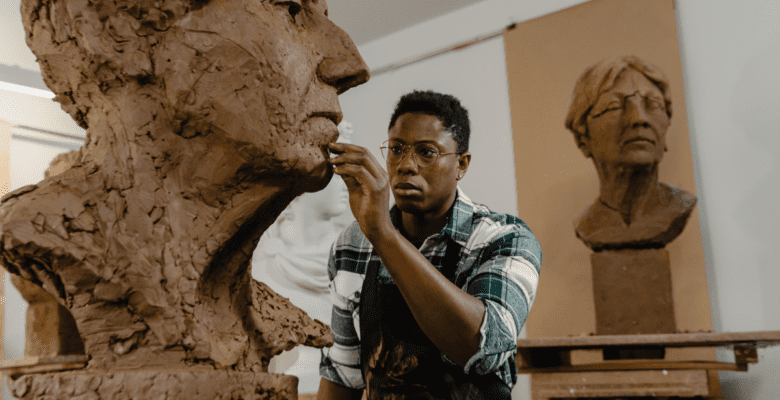
Approximately 21% of artists are from Black or ethnic minority backgrounds. Often ethnic minority artists report that they have struggled to be fairly supported by some art institutions.
In December 2018, ACE published research on the livelihoods of visual artists. It found that most artists cannot survive on their income from art alone and take other low paid jobs to make ends meet. Even then, the average total income for visual artists in 2015 was £16,500, of which roughly £6,020 was from artistic work i.e. about a third of their income came from art.
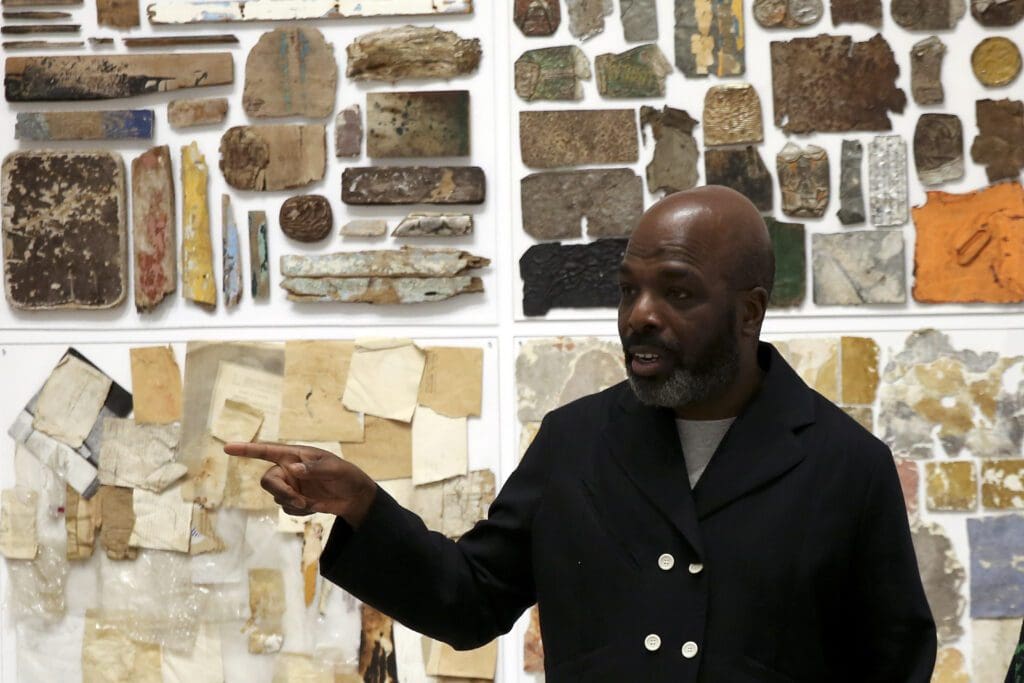
Duro Olowu, artist & fashion designer at opening of the Exhibition of contemporary art The Palace at 4 a.m (Photo by Milos Bicanski/Getty Images)
This put artists in a category of workers that earn below the national living wage in that year. Only 2% artists go on to make over £50,000 a year from their art. This report acknowledges that it did not provide data broken down by ethnicity other than to say that there are fewer ethnic minority artists as a proportion than there are in the population. In 2023 a report commissioned by the artists network entitled Structurally F***ed shared artists perspectives on the systemic issues within the art world. The title and the data from this report come from anonymous stories collected through an online survey called Artist Leaks by Industria.
For exhibitions with publicly funded galleries artists are often only paid an exhibition fee (often approx. £2,000-6,000 depending on the size of the gallery) and are generally not paid for the hours of time spent making the artworks – which could be a year or more. Once translated into hourly rates using the artists’ assessment of their time spent the fees provide less than minimum wage.
Other forms of racism include the fact that Black and minority artists are often sought by public institutions when their work tells identity stories or references their exclusion but they struggle to be included in exhibitions of landscapes or environmental works or abstract sculpture. So they feel less free to make the work or explore themes they want to. Or that the artworld at the Venice biennale made a stand against Russia because it started a war in Ukraine but no similar stand was taken against Israel this year.
Audiences
The Audience Agency collects data from the same organisations each year. For 2020/21 8% of England’s audience members responded yes to having a disability; 10% described their ethnicity as mixed, Asian or Asian British, Black or Black British, or other and 64% of audiences were female.
Unfortunately the data shows that Asian and Black audiences are not engaging in the publicly funded arts organisations. This might be because the work does not represent them. However, I also often see truly wonderful work that does represent our audiences but still does not reach them. Personally, I would encourage everyone to see the new show at the Whitechapel Gallery – a retrospective of work by artist Gavin Jantjes whose early work was about apartheid and who now makes beautiful abstract paintings.
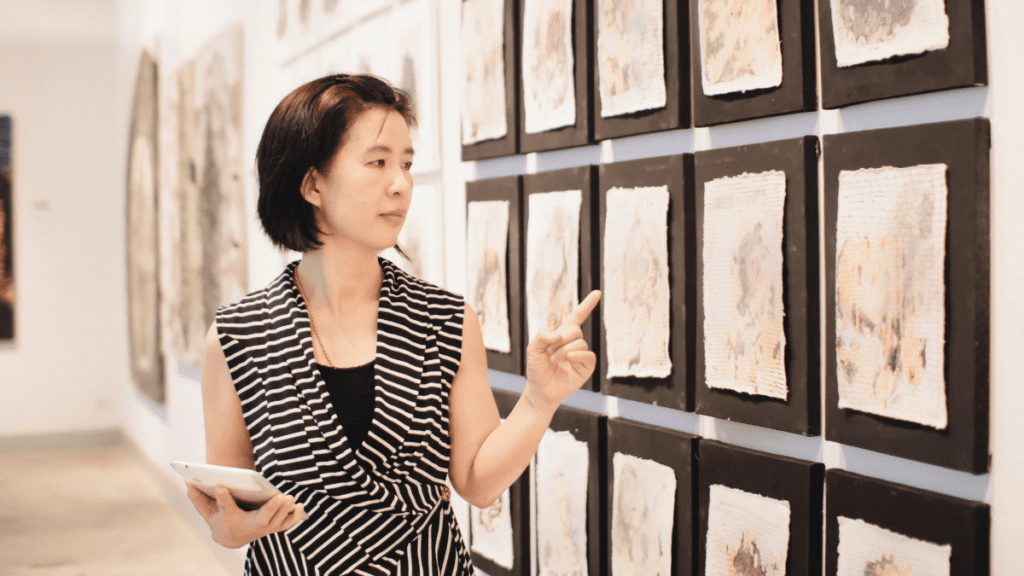
If more people did visit their local galleries and arts organisations, enjoyed the work and actively called for and asked to see work that was meaningful or relevant to them I believe this could be a route to an improvement in the cultural sector overall. In many ways we have seen this revolution happen slowly in television and it is time for the same depth of challenge to happen in the wider creative sector.
Author: Seema Manchanda, Chair of Trustees