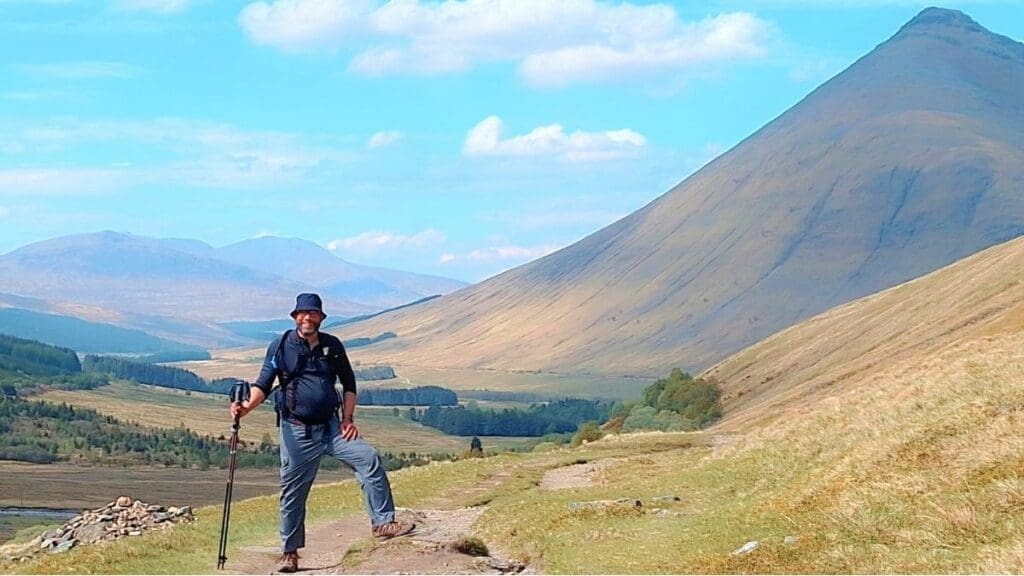
Ahead of National GetOutside Day, ARE’s Cornelius Alexander draws on his experiences of hiking in New Zealand, Alaska and Albania to explore the benefits of walking, the barriers that can make the outdoors harder to access for Black, Asian and mixed heritage communities, and the groups helping more people feel that they belong in nature.
Estimated read time: 5 minutes
Walking, or its more intense sibling, hiking, is a very personal pursuit and a great way for us all to improve our physical and mental health.
As someone who grew up in the heart of the East End, I find that spending a day out in the country or along the coast gives my senses a change of pace. The constant London chatter, the beeping car horns, eye-catching posters or billboards and the smells emanating from food stalls or takeaways are replaced with the sound of the breeze, the waves lapping the coastline or the smell, as someone said on a recent walk, of ‘fresh air’.
Giving your senses a rest is not the only reason to walk. There is also:
- Health and fitness: Walking can improve cardiovascular fitness and can support attempted weight loss.
- Enjoying nature: People walk to experience Britain’s landscapes, from mountains and moorlands to coastal paths, forests and national parks.
- Mental wellbeing: Walking provides a break from work and technology, helping people reduce stress, clear their minds and feel more connected to their surroundings.
- Spending time with others: Walking is often a social activity, whether with friends, family, or by connecting with walking clubs or organised groups.
- Exploration, adventure and achievement: Hiking offers opportunities to discover new places, challenge yourself, complete routes or achieve ambitions such as a long-distance trek.
So why can getting involved still be harder for some Black, Asian and mixed heritage communities?
There are clear signs of interest in nature from a young age. According to The Children’s People and Nature Survey for England 2025, 73% of Black or Black British children and young people said they watched television programmes about nature, compared with 56% of White, 54% of Asian or Asian British and 53% of mixed or multiple ethnic groups.
Black or Black British children and young people were also the most likely to read about or see nature in books, at 58%, followed by those from mixed or multiple ethnic groups at 46%, compared with 34% of White and 32% of Asian or Asian British children and young people.
These figures measure how children learn about nature, rather than their participation in walking or hiking. However, they challenge the assumption that lower visibility in outdoor spaces necessarily reflects a lack of interest.


Access and geography
Interest in nature does not always translate into equal access. Natural England’s Adults’ People and Nature Survey found that 29% of Black or Black British adults and 25% of adults identifying as Mixed reported that they did not have local green and natural spaces within easy walking distance. This compared with 18% of White adults.
The pattern can also be seen among children and young people. In 2025, 35% of White children and young people reported that woods or forests were within easy walking distance, compared with 24% of Asian or Asian British, 23% of mixed or multiple ethnic groups, and only 12% of Black or Black British children and young people.
Cultural familiarity and role models
Hiking in the UK may not be part of family or community traditions, making it feel unfamiliar or less relevant. Limited representation of diverse people in outdoor spaces can reinforce the perception that UK hiking is “not for people like me.”
Safety and belonging
Some people may feel uncomfortable or unsafe in isolated outdoor environments, particularly when hiking alone. Concerns about harassment, being judged or simply not feeling welcome can discourage participation among those who are Black, Asian and mixed heritage.
Time, money and transport
As mentioned, Hiking can involve costs for transport, clothing and equipment, while travelling to the countryside takes time. Work, family responsibilities and financial pressures can make regular participation harder.
The YHA’s Breaks Programme offers subsidised or fully funded residential stays at YHA hostels for young people and families facing challenges.
An outdoor sector that hasn’t always felt inclusive
Traditional outdoor organisations and outdoor equipment marketing have often lacked ethnic diversity representation. Without actively creating welcoming, representative and accessible experiences, the sector can unintentionally reinforce existing participation gaps. Intentionally or unintentionally, making the countryside off-limits is clearly wrong, and in order to make it a destination for all, this needs to be tackled.

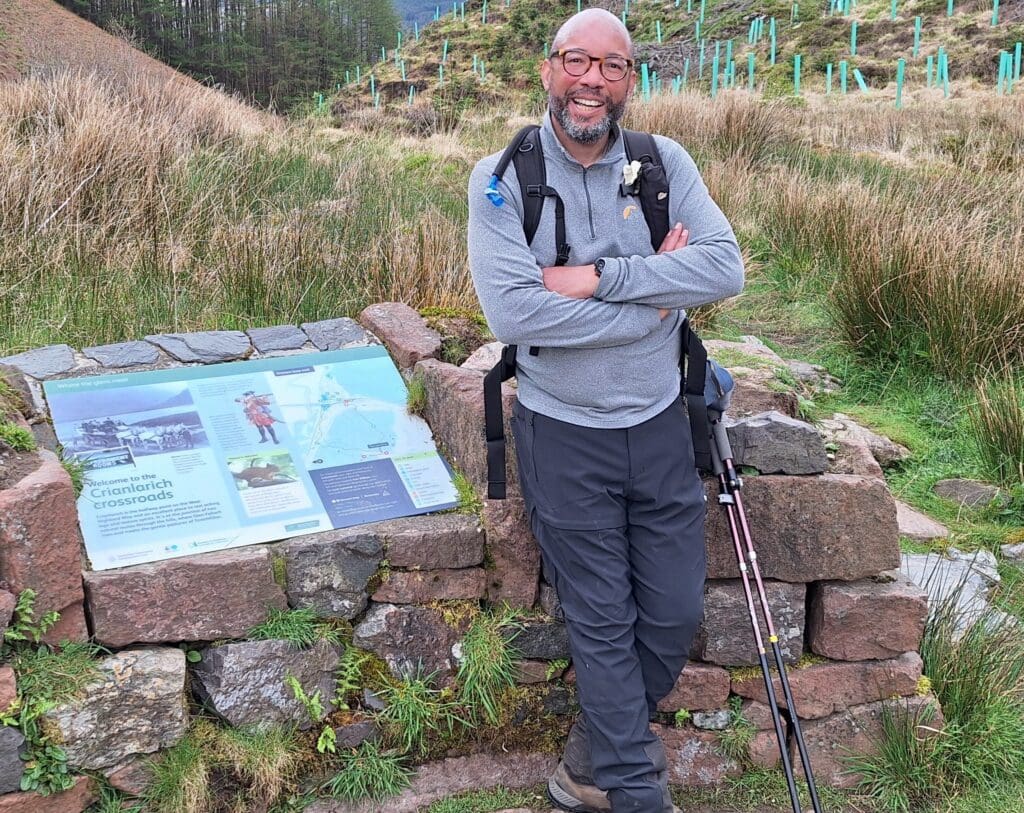
This Sunday, September 27, is National GetOutsideDay, designed to get everyone outside and into nature. Although there is not a focus on Black, Asian and mixed heritage people, their OS Champions include a Black Londoner and a woman who grew up in Africa, a positive sign, but more needs to be done to increase such role models.
More outdoor leaders is one way to make a change and get more diverse communities walking. Not everyone has to be like Jamaican-born polar explorer and Chief Scout Dwayne Fields to be a role model.
Equally, there are Black, Asian and mixed heritage-led groups which have been created to serve what they feel is a gap in the market. Below is just a sample of the groups which appeared over the last decade or so:
UK-wide
- Black Girls Hike UK (Black and mixed heritage women)
- Muslim Hikers (Primarily Muslim and South Asian communities; open community ethos)
- Wild in the City (People of colour, with a strong, Black-led focus)
- Flock Together (Black, Brown and other people of colour)
- ESEA Outdoors UK (East & Southeast Asian people, including mixed ESEA heritage)
- Wanderers of Colour (People of colour)
- Moja Collective (Black and Brown people)
Regional – Peak District / Sheffield
- Peaks of Colour (People of colour)
Black, Asian and mixed heritage walkers continue to step up and create community initiatives, but a national gov/industry programme will go a long way to address these disparities. The YHA leads the way with its Outdoor Citizens scheme to support community initiatives to get people into the outdoors.
So, grab your waterproofs, your OS map and a friend and this weekend, see what’s over that hill or further along the coastline. We all belong in nature!


Author
Cornelius Alexander
Head of PR (Public Relations) and Communications